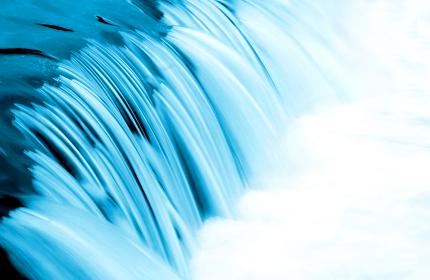
Mihaly Csikszentmihalyi is a psychologist who has devoted his career to researching happiness and fulfilment. His research has shown that although people enjoy indulging in pleasure, such as eating and drinking, sex and shopping, this eventually wears off, leaving us feeling unsatisfied. True happiness comes from learning and developing our skills to overcome meaningful challenges. When we are fully absorbed in doing this, we experience what Csikszentmihalyi calls flow:
Flow – An almost automatic, effortless, yet highly focused state of consciousness.
(from Creativity by Mihaly Csikszentmihalyi)
When we are in flow, we are fully absorbed in whatever we are doing and find it easy to achieve peak performance. The experience is accompanied by intense feelings of pleasure and satisfaction.
Flow can occur in many spheres of human activity, physical and mental. Athletes call it being in ‘the zone’, but we don’t have to run a marathon or win an Olympic medal do experience flow – we have all experienced the enjoyment of becoming absorbed in doing a task well.
Flow is particularly common in artistic and creative spheres, during those times when ideas, images, feelings and/or words seem to flow easily and the work takes on a momentum of its own. Many artists make big sacrifices in other areas of their lives so that they can pursue creative flow. Professional creatives have typically had powerful experiences of flow, and can relate to the intense feeling of satisfaction when they enter flow – and equally intense feelings of frustration when they are unable to get into flow in their work.
Csikszentmihalyi identifies the following nine characteristics of flow:
- There are clear goals every step of the way. Knowing what you are trying to achieve gives your actions a sense of purpose and meaning.
- There is immediate feedback to your actions. Not only do you know what you are trying to achieve, you are also clear about how well you are doing it. This makes it easier to adjust for optimum performance. It also means that by definition flow only occurs when you are performing well.
- There is a balance between challenges and skills. If the challenge is too difficult we get frustrated; if it is too easy, we get bored. Flow occurs when we reach an optimum balance between our abilities and the task in hand, keeping us alert, focused and effective.
- Action and awareness are merged. We have all had experiences of being in one place physically, but with our minds elsewhere – often out of boredom or frustration. In flow, we are completely focused on what we are doing in the moment.
- Distractions are excluded from consciousness. When we are not distracted by worries or conflicting priorities, we are free to become fully absorbed in the task.
- There is no worry of failure. A single-minded focus of attention means that we are not simultaneously judging our performance or worrying about things going wrong.
- Self-consciousness disappears. When we are fully absorbed in the activity itself, we are not concerned with our self-image, or how we look to others. While flow lasts, we can even identify with something outside or larger than our sense of self – such as the painting or writing we are engaged in, or the team we are playing in.
- The sense of time becomes distorted. Several hours can ‘fly by’ in what feels like a few minutes, or a few moments can seem to last for ages.
- The activity becomes ‘autotelic’ – meaning it is an end in itself. Whenever most of the elements of flow are occurring, the activity becomes enjoyable and rewarding for its own sake. This is why so many artists and creators report that their greatest satisfaction comes through their work. As Noel Coward put it, ‘Work is more fun than fun’.
So that’s the theory – read how to put it into practice through coaching in How Coaching Creates Creative Flow.

Hi,
I am doing a workshop called Flow and came across your post which is quite related really. funny when you think about it, as I will also be referring to Csikszentmihalyi. Could you give me permissions to reproduce the image on your blog post. I will include a link back to this post if you wish?
Regards,
Navdeep
Navdeep Singh’s last blog post..A Very Special Request: Take Back your Personal Power
Hi Navdeep,
I can’t give you permission myself as I licensed the image from http://www.istockphoto.com – if you want to use it you’ll need to create an account and buy a licence from the site. The licenses are very reasonable – about £2 or £3 per image.
Here’s the image you want: http://www.istockphoto.com/file_closeup.php?id=830637
Good luck with your workshop!
Mark
I am so glad I have found your site Mark.
I have had several articles published when I lived in the UK, I moved to Australia nearly 2 years ago with the hope of continuing my writing. Sadly my husband was in a serious car crash in July and although he is getting better, my motivation has dried up as we both try and move on from it.
Like many writers, I have ideas and characters bashing down my imagination waiting to get out and because I am in the ‘wrong’ industry as in one that just pays the bills and not something I love, it is so hard to know how to move forward without a mentor or someone in the know.
Shame there isnt someone like you in Perth because you are the first person I have come across that I feel would really be able to help me.
Keep up the good work and I hope that by checking out your ebooks and keeping up with your site, I will get there and rid this invisible wall that is stopping me from doing what I love.
Thanks again, your site is brilliant.
Thanks Samantha, sorry for the delay replying, your comment slipped through the net. I’m glad you’ve found my site helpful in what sounds like a very challenging situation.
Re just paying the bills vs doing what you love, you might find my series on creative blocks helpful (over at my other site, Lateral Action), especially the piece about Creativity v Cash: http://lateralaction.com/articles/creative-block-creativity-cash/
This is really good to hear. I feel creative flow in moments, and in acts. I feel it when the wind blows, when I see children laughing, when I’m creating especially personal work. When I paint and express through color and words I feel this flow.
Thanks for the post Mark! Found your post after an HBR post on managing creative people mentioned Csikszentmihalyi, which sent me off down the Google rabbit hole looking for more on his work. I’ll keep these things in mind as I manage folks.
I liked your piece on Happiness (I agree about the blanket naurte of the term). I have a matching book collection born out of similar puzzlement. Things eased for me when I saw that the pursuit of happiness is not actually my motivation. Instead I recognise a conflicting, shifting set of goals that include: fulfillment (sense that enough is indeed enough), being present, improvising in the moment (a kind of peace of mind and attention to what is in front of me), excitements and adventures (that sense of new possibilities and the unexpected), a warm family home (to ward off loneliness) and the means to sustain the above. That’s today’s list anyway.